YOUR CART
IS EMPTY
IS EMPTY

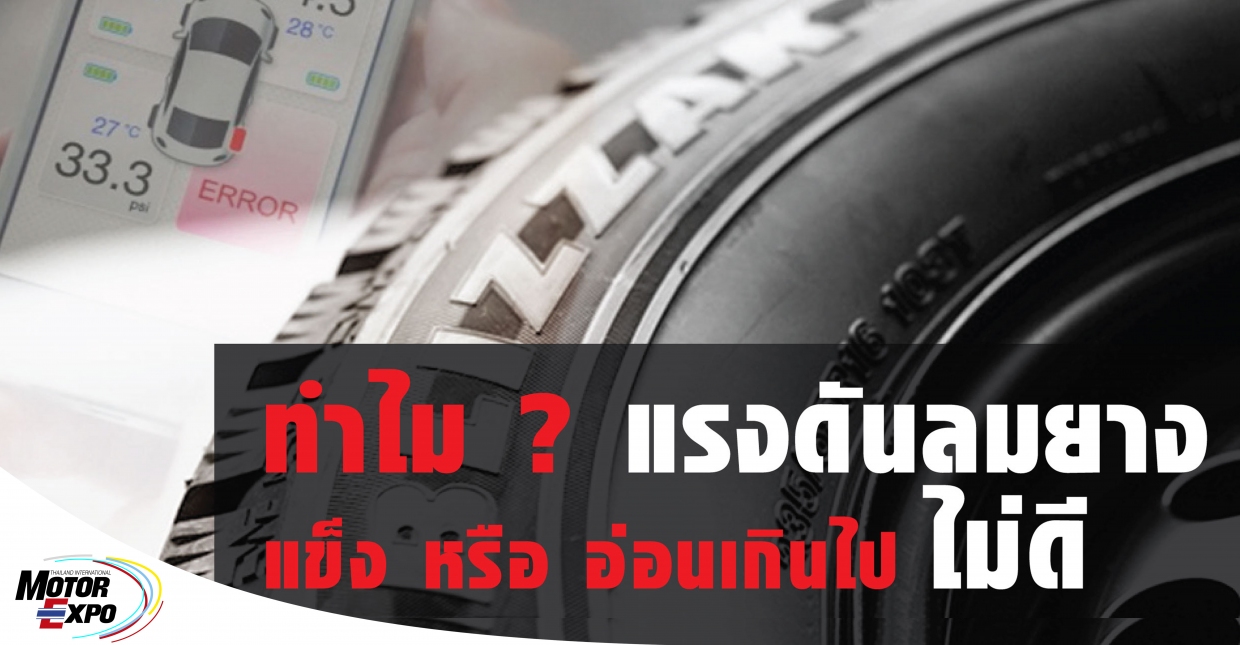
Many people have been driving for years and never knew how much air pressure their front and rear tires needed?... Checking tire pressure is something that should be done regularly, even when it's not the rainy season, and can be easily checked by yourself as follows...
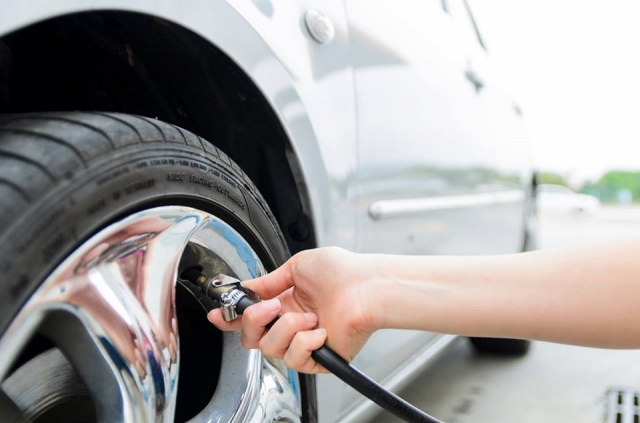
•How to check tire pressure correctly
Tire pressure should be checked at least once a month, including the spare tire. It must be checked before use, while the tires are still cold. You can check according to the car manufacturer's specifications,the car manual, the label on the side of the door, the glove compartment on the passenger side, or inside the fuel cap (depending on the car brand). Correct tire pressure helps reduce premature wear, minimizes damage to the internal structure of the tire, and reduces the risk of losing control of the car. Normally, tire pressure decreases by about 2-3 PSI/month.
•Why measure and inflate tires when they are cold
Because the measurements will be accurate. However, if it's necessary to inflate hot tires because the car has just been driven and parked (which is often the case), add about 2 PSI extra from the specified value, or you can add a little more and then measure and release the air to the correct level when the tires are cold. And if avoiding driving fast in the rain is truly impossible, you might need to add another 2-4 PSI to the tires so that the tire pressure helps increase the grip of the tire surface, allowing it to shed water better. Proper tire inflationalso helps extend the lifespan of the transmission system and reduces fuel consumption, as these are continuous cause-and-effect relationships.
•How is it bad if tire pressure is too low or too high?
It consumes more fuel because the tires have higher than normal friction. When friction is high, the engine has to work harder than normal, and increased consumption will follow inseparably. Therefore, tire pressure must be inflated appropriately according to the load weight specified in the car's manual, because tire pressure that is too hard or too soft is not good. •If the tire pressure is too high,it doesn't affect fuel consumption. Secondly, the steering becomes heavy, and the power pump works harder. When the pump works harder, the engine also has to work harder. Another consequence is abnormal tread wear. Too much or too high tire pressure, even though it helps the wheels rotate easily and can reduce consumption, the consequence is harshness that will damage suspension components. Therefore, tires should be inflated when they are cold. As for the air pressure, refer primarily to the manual for each car model. [Read more: How important is tire pressure? ]
And for long-distance travel, tire pressure should be increased by another 3-5 PSI. Remove unnecessary luggage, leaving only what is essential for use. The more cargo there is, the harder the engine has to work, resulting in increased fuel consumption. For example, golf clubs should be removed and kept at home after playing; carrying them around unnecessarily wastes fuel and directly affects the lifespan of the transmission system... Once the tires are inflated, don't forget! Securely tighten the tire valve capto prevent debris, dust, or moisture from seeping into the tire, which can cause damage to the car tires.
•How important is tire rotation?
Car tires will not wear evenly across all four tires due to factors such as vehicle condition, road surface condition, wheel alignment, vehicle turning, tire inflation, tire position, driving style, and season. Especially the front wheels are most prone to abnormal tread wear. Therefore, to extend tire lifespan, tires should always be rotated (radial tires should be rotated every 10,000 km). [Read more: Why rotate tires?]
Source AUTOINFO Online
Image: www.iStockphoto.com / Skill Driving Experience


Follow Motor Expo Club Network